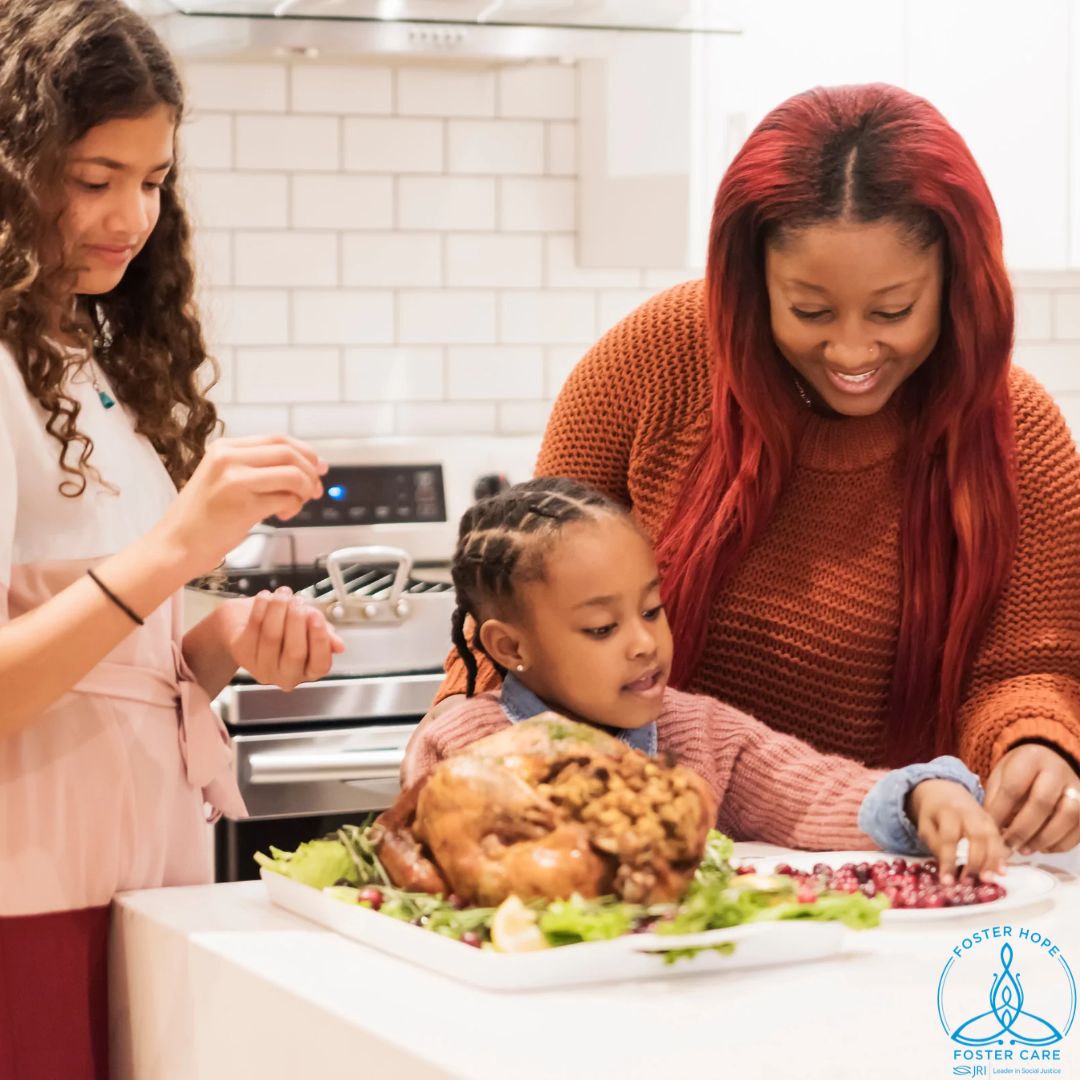
Thanksgiving is a wonderful time for gathering, reflecting, and connecting. It is food and family. For some, faith and football are thrown into the mix, too.
For children and youth in the foster care system, sometimes this holiday feels particularly hollow. While they may enjoy some aspects, there is often an undercurrent of grief that may go unnoticed or even pushed aside and minimized. Let’s explore a few ways to offer compassion and respect for our kiddos.
Space
Thanksgiving celebrations often include gatherings, either at the foster family’s home or going to other people’s homes. Extended family and friends swarm households. It is busy and bustling. Even when it is your own family who you’ve known your whole life, this can feel overwhelming. Imagine not knowing these people, feeling different, and being reminded that you are not with your family. How would that feel? What would you want in that situation?
We certainly don’t want to over-correct and exclude children, because that would also be hurtful. A good plan would be a plan for space. Ensure that if the party is going on at your home, the child’s room is off limits and they can spend as much time in there as they need. If they choose not to participate in the meal, ask what they would like on their plate and let them eat in their room (yep, bend the rules this once if food is not typically allowed in bedrooms). Check on them yourself, rather than sending an aunt or cousin they don’t know. Let them know what is going on and that they are welcome to join, but they can also hang out on their own. Let guests know to please respect their space and not make an issue of it. If you are at someone else’s house, plan perhaps to shorten your visit and plan ahead with the host to see if there is a space where your young person can take space. Bring some things to do, comfort items, and even something cozy like a bean bag chair, a favorite pillow, or a blanket to curl up with.
Plan
Talk with kiddos about the plan. Little details like asking who they would like to sit next to at dinner if they choose to eat, who will be coming to the house or whose house you will be going to, and what will be served are really helpful for kids experiencing something new. Talk ahead of time about the expectations for behavior (you can run around in the yard, but in the house we need to use walking feet and inside voices; no phones at the dinner table; we’re going to dress up a little- do you prefer pants or a skirt?) and plan how to be successful. Every home is different- maybe you wear pajamas all day, maybe you watch movies, maybe you play flag football in the park. A child will not know what to anticipate unless you give them a blueprint.
Ask
Sometimes we avoid difficult conversations. Will asking a child about their family traditions for a holiday make them miss their family more? No. They are missing their family. Opening the door for conversation lets them know you care, you accept and support their feelings, and that you are willing to hear about it. Maybe they tell you their favorite thing are biscuits from the blue can on Thanksgiving. That offers you the opportunity to provide those biscuits. Maybe they eat ham and you always serve turkey. Could you get a ham, too? Perhaps their favorite pie is a chocolate silk pie and you only do apple; grab a chocolate silk pie and see if that makes a child feel remembered.
Also ask if they have questions. They might not celebrate this holiday. Ask if they have something they like to do or don’t like. Find ways to honor that.
Cultural Connections
While many people celebrate Thanksgiving, that doesn’t mean everyone does. Some groups do not celebrate holidays at all. Others have deep cultural wounds that this holiday in particular re-opens and it is not a day of celebration, but of mourning. Others may include Thanksgiving as a religious holiday and go to their place of worship. Using the information you have about a child’s background, their family, and their identity, consider if there are special accommodations you can offer. Asking their biological family about their thoughts on Thanksgiving can also be connecting and respectful.
Giving Thanks
Many folks enjoy a tradition of going around the table and saying what you are thankful for. This is a nice gratitude practice and can be uplifting after a hard year. However, this can feel aggressive and overwhelming for kids in care. They are dealing with adults making decisions about their lives, living with uncertainty, and have very little choice in the path on which they find themselves. If this is a tradition in your family, let everyone know that it is optional. They can skip a turn at the table. An option might be to allow people to write down their gratitude's, and someone reads each or you post them on a cork board, so that it isn’t such a “spotlight” moment where a child feels pressure or embarrassment if they don’t feel like participating.
Escape Hatch
If it isn’t going well, if big feelings are taking over, have a plan. If that means you and the child hanging out in their room, that can be the plan. If that means you say “Pineapple Pizza” and that means it is time for everyone in your group to pack up and go home, that can be the plan. If the child is overwhelmed or someone made them feel uncomfortable, let them know how they can subtly let you know. That is an important plan.
Have escape hatches that don’t feel like a crisis but are honored if they need to be used. Holidays in foster care can be hard and fighting against them can be a losing battle. An escape hatch means you are shifting gears and serving the child in your family.
Synopsis
With a little planning, compassion, and consideration, you have the ability to make a holiday much more comfortable and safe for a child in foster care. Bring your guests into this opportunity and work together to create an atmosphere that is safe and embracing for the child in care in your life.
If you feel you could offer sanctuary and support to a child in foster care, please contact us. We’d love to talk with you!