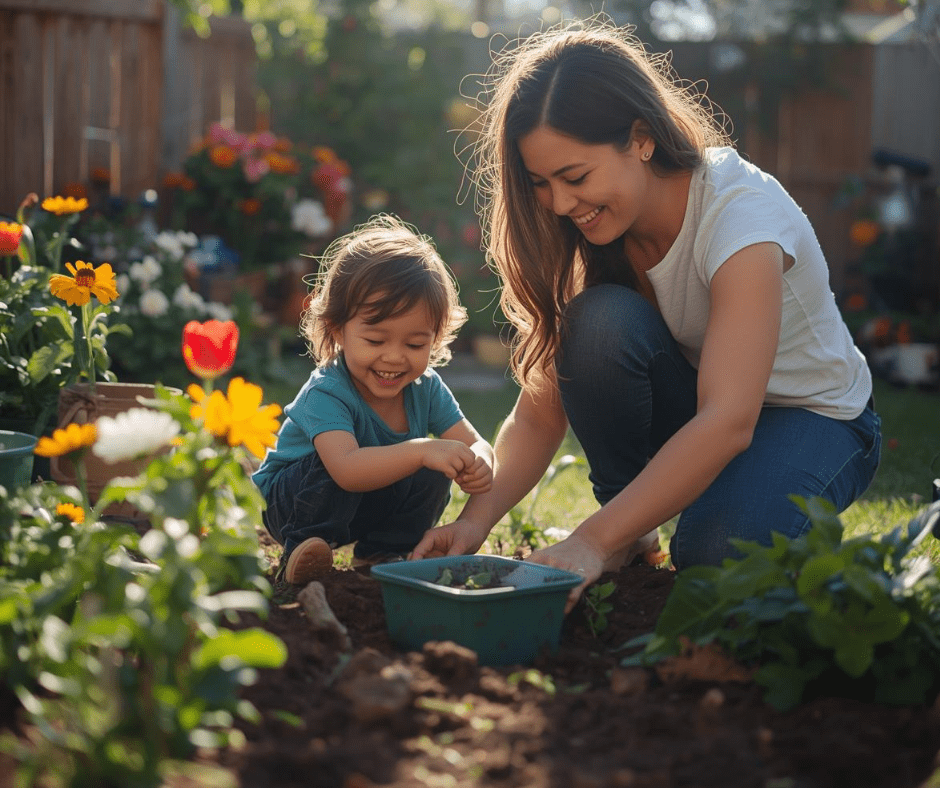
After a long New England winter that appears to have no end in sight, many of us are daydreaming of a warm summer breeze, temperatures in the 80s, beautiful greenery and flowers in bloom. Those lucky enough to have a green thumb will tell you March is generally the best month to start gardening, as the days get longer and rising temperatures allow for indoor seeding to start. However, gardeners will tell you there’s a learning curve when working with plants. Each plant species reacts differently to sun exposure, soil, water, even the planters they are placed in. Thus, gardening is a practice that takes patience, time, flexibility, and the willingness to learn; all skills that are commonly asked of foster parents.
The word “foster” is defined as encouraging or promoting the development of something or someone. The traumas typically experienced by children and youth in care often lead to a stunted growth period. As a result, a child may not meet their age-typical emotional, educational, or physical development when they first enter a foster home. Therefore, a foster parent’s primary role is to help cultivate and promote a child’s growth. Similar to gardening, the techniques used to help one child flourish may not work well for another child.
For example, some youth and children in our program do very well with a busy schedule. They do best when engaged in dance classes, after school programs, and weekends filled with activities. Others may get overwhelmed with the idea of being a “social butterfly”. Children are also in different stages of grief, a reality that can typically be seen with siblings placed in the same home. While one child may be in a stage of anger; the other sibling may be experiencing feelings of sadness. This means a foster parent must be willing to learn each child’s individual needs and wants and respond accordingly.
Foster parents are like gardens who look at a humble seed and can envision a beautiful rose bush or a mighty oak tree. They see the possibility of the strength within each child. They know that if nurtured correctly, each child will bloom. If you’ve been thinking about becoming a foster parent, make 2026 your year. Green thumbs are not required, simply the desire to nurture the best in every child.